
Introduction
Lighting plays a major role in interior design. It affects mood, comfort, and the overall look of a room. Because of this, choosing the right lighting is essential for every home. Good lighting can make a small apartment feel bright and open. On the other hand, poor lighting can make a space look dull and cramped. Many homeowners take inspiration from Interior Contractors in Hyderabad, as they use creative lighting techniques to make homes both beautiful and functional.
Whether you are decorating a living room, bedroom, kitchen, or bathroom, selecting the appropriate lighting fixtures, light tones, and layered lighting solutions is essential for both aesthetics and functionality. In this blog, we’ll guide you through how to choose the right lighting for every room, with expert tips, common mistakes to avoid, and ways to make the most of natural and artificial light.
Lighting Tips Recommended by Interior Contractors in Hyderabad
Professional Interior Contractors in Hyderabad often rely on a mix of ambient, task, and accent lighting to create balanced interiors. Their approach focuses on optimizing natural light, choosing the right light temperature, and placing fixtures in a way that enhances the room’s aesthetics and functionality. By following their techniques, you can illuminate your home more effectively and stylishly.
Lighting Tips from Interior Contractors in Hyderabad
 Why Lighting Matters in Interior Design
Lighting can change the mood of any room. For example, the right lighting helps you relax, work better, and enjoy your home more. It also highlights your décor and makes your space look cleaner and more welcoming. However, the wrong lighting can create harsh shadows and make rooms feel uncomfortable.
 Highlight textures, colors, and decor Create cozy, relaxing corners Make spaces appear larger and more open Enhance productivity and focus in work areas Improve overall well-being
Choosing the wrong lighting, on the other hand, can result in harsh shadows, dim spaces, or cold, sterile environments that feel uninviting.
Types of Lighting You Should Know
 Ambient Lighting
Ambient lighting is the main source of light in a room. It brightens the whole space and sets the tone for your design. In addition, it builds the base for your other lighting layers, such as task and accent lighting.
 Task Lighting
Task lighting focuses on specific areas where you perform activities. For instance, you need bright task lighting for cooking, reading, or grooming. Desk lamps, under-cabinet lights, and vanity lights are great examples. Moreover, task lighting improves comfort and reduces eye strain.
 Accent Lighting
Accent lighting adds depth and character to your room. Furthermore, it highlights artwork, shelves, or special features. Wall sconces, LED strips, or spotlights work perfectly for this purpose.
 Decorative Lighting
Decorative lighting is used to make your home look stylish. As a result, it becomes a beautiful design element. Chandeliers, pendant lights, and designer lamps often act as statement pieces that draw attention.
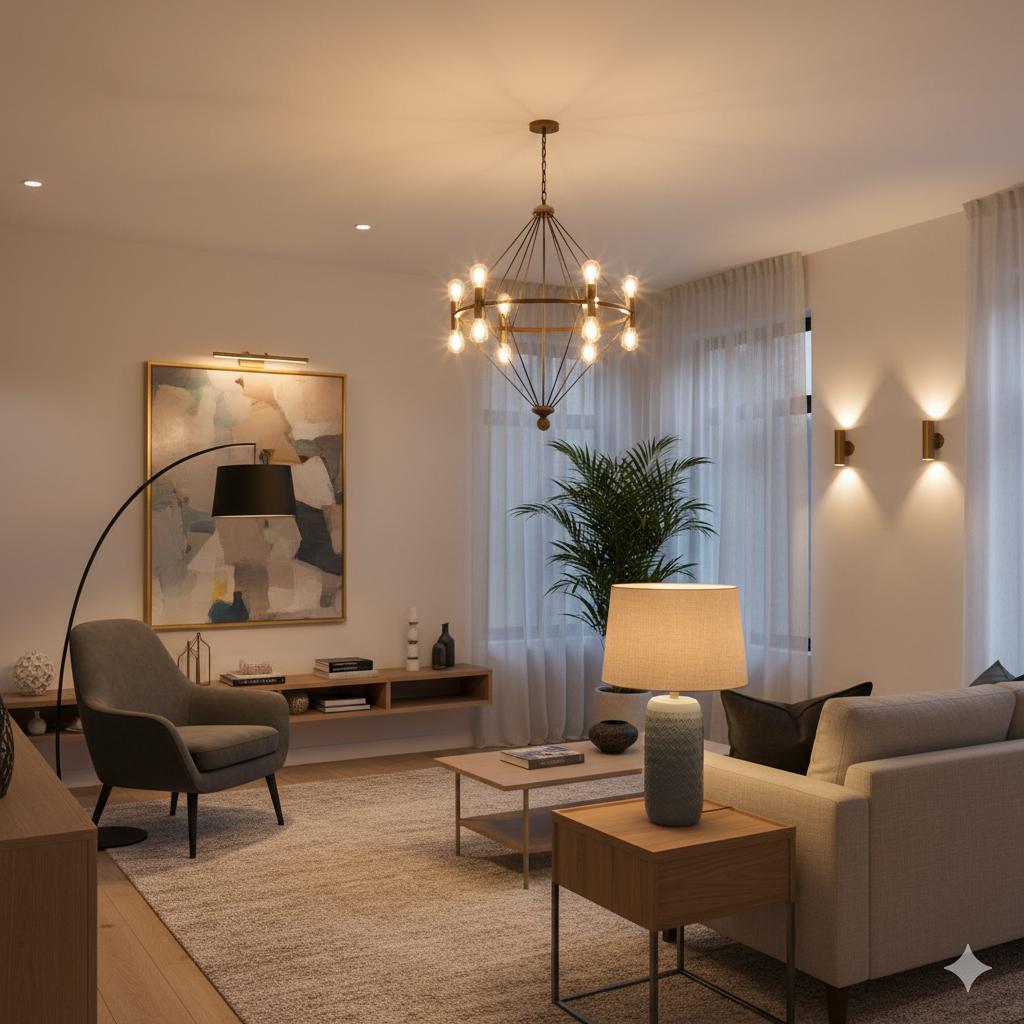
Living Room Lighting Ideas
 Living Room Lighting
The living room is where you relax and entertain guests. Therefore, you need layered lighting—ambient, task, and accent lights. Add floor lamps or table lamps to create cozy corners. Additionally, highlight shelves or artwork with accent lighting.
Best Practices: Use layered lighting—ambient, task, and accent Incorporate soft, warm lighting for relaxation Add floor lamps or table lamps to create cozy corners Highlight architectural features like shelves or artwork with accent lighting
 Bedroom Lighting
A bedroom should feel calm and soothing. To achieve this, use soft, indirect lighting. Place reading lamps near the bed. Additionally, choose warm bulbs for a relaxing effect.
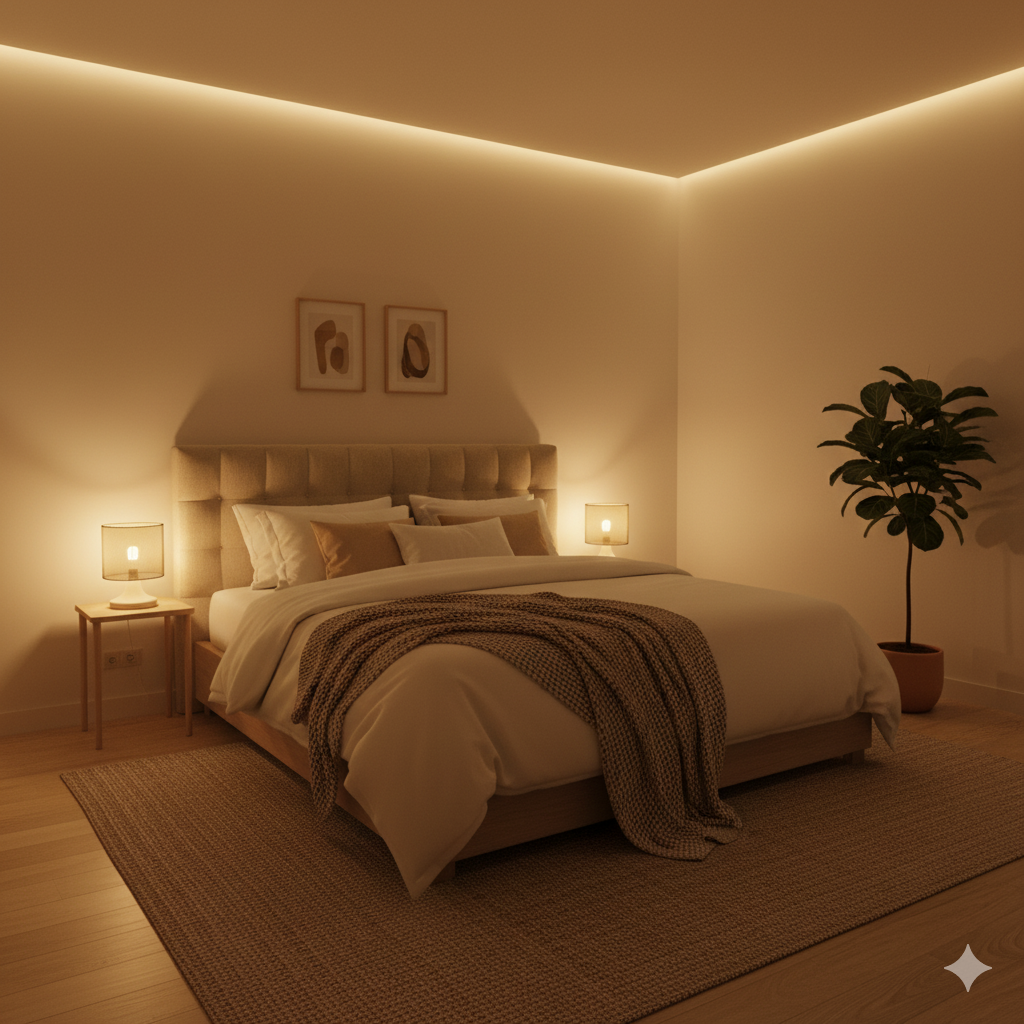
Best Practices: Use soft, indirect lighting instead of harsh overhead fixtures Place reading lights near the bed Install dimmers for adjustable brightness Consider warm bulbs to create a soothing atmosphere
 Kitchen Lighting
The kitchen needs bright lighting for cooking. For this reason, under-cabinet lights are essential. Add pendant lights above the dining area. Also, make sure your overhead lighting does not cast shadows on work surfaces.
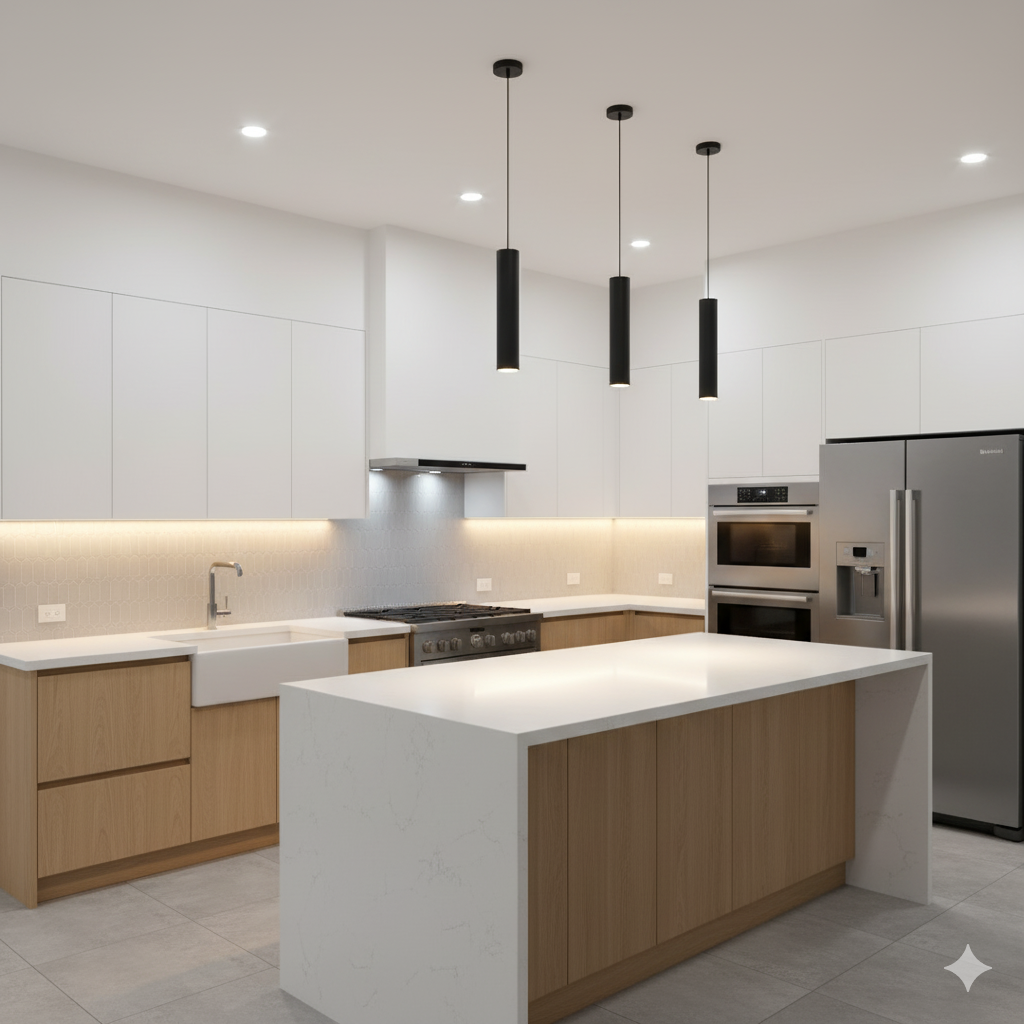
Best Practices: Use under-cabinet lighting for countertops Install overhead lights with bright, cool tones for cooking Add decorative pendant lights above the dining area Ensure proper placement to avoid shadows on work surfaces
 Bathroom Lighting
Bathrooms require practical yet relaxing lighting. Because of this, use lights on both sides of the mirror to reduce shadows. In addition, choose fixtures that resist moisture.
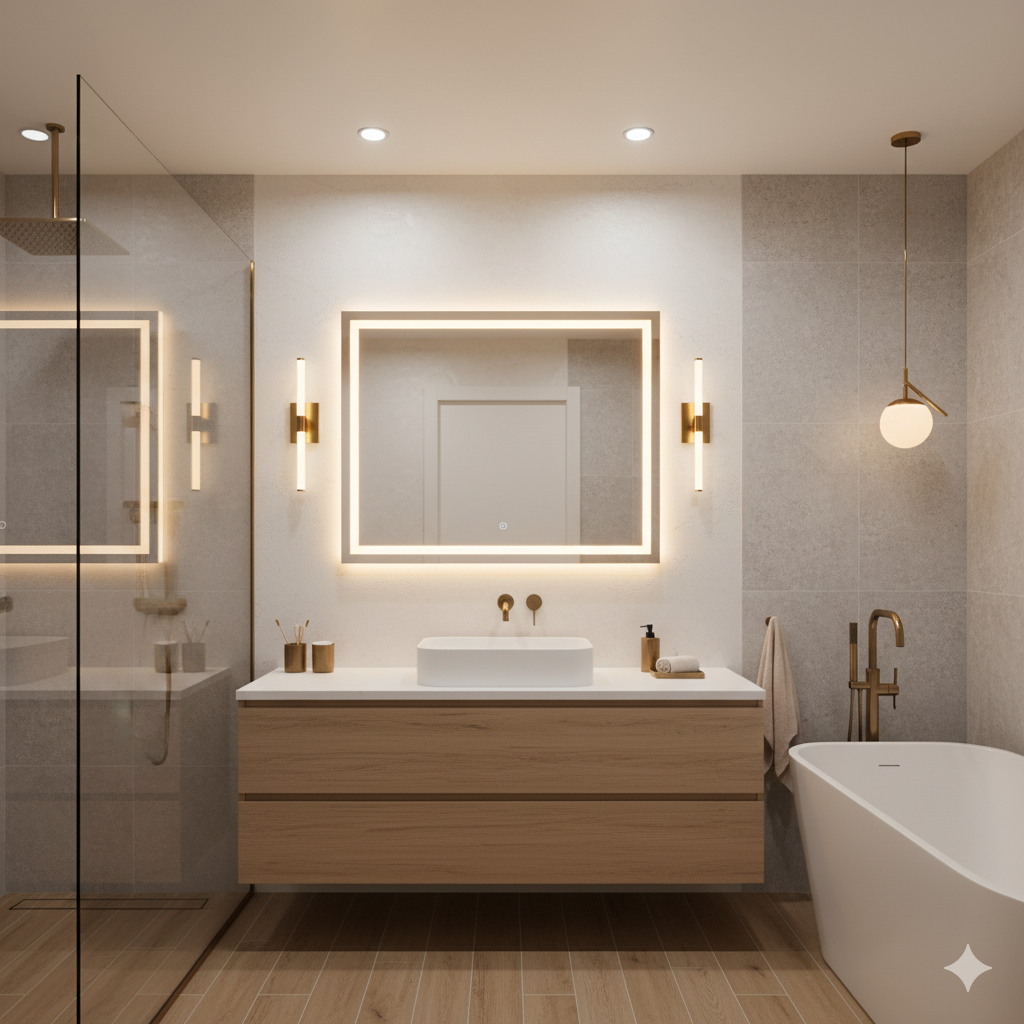
Best Practices: Use vanity mirrors with side lights to prevent shadows on the face Choose moisture-resistant fixtures Combine ambient lighting with task lighting Add accent lights for mirrors or shelves to This enhances aesthetics
 Home Office Lighting
A workspace needs lighting that promotes focus without causing eye strain.
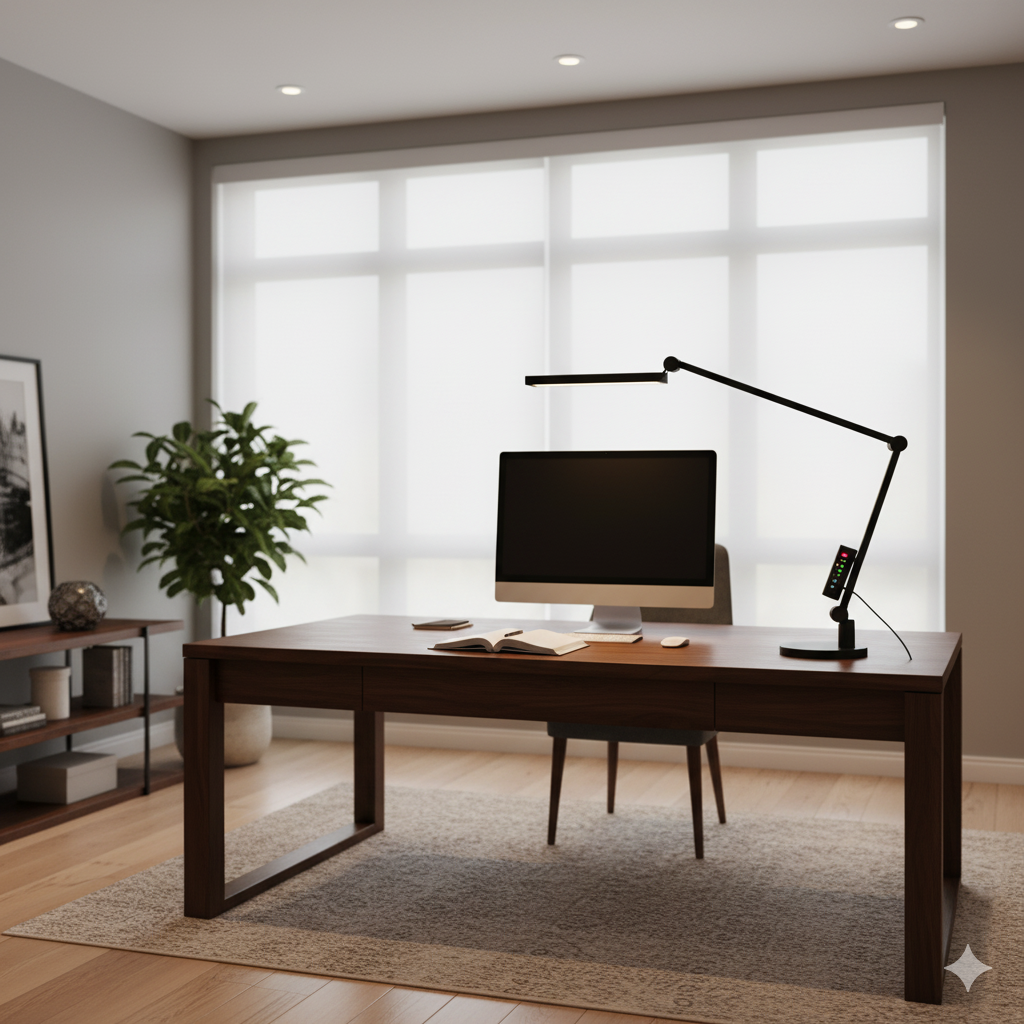
Best Practices: Use task lighting on the desk Choose adjustable lamps Avoid glare from overhead lights by using diffused lighting Balance natural daylight with artificial sources
Expert Lighting Ideas from Interior Contractors in Hyderabad
From choosing warm bulbs for bedrooms to installing task lighting in kitchens, Interior Contractors in Hyderabad emphasize using lighting to elevate the mood and purpose of every room. Their professional insights It also helps homeowners achieve a more modern, organized, and beautiful living space.
Choosing the Right Bulbs For Best Lighting Ideas Suggested by Interior Contractors in Hyderabad
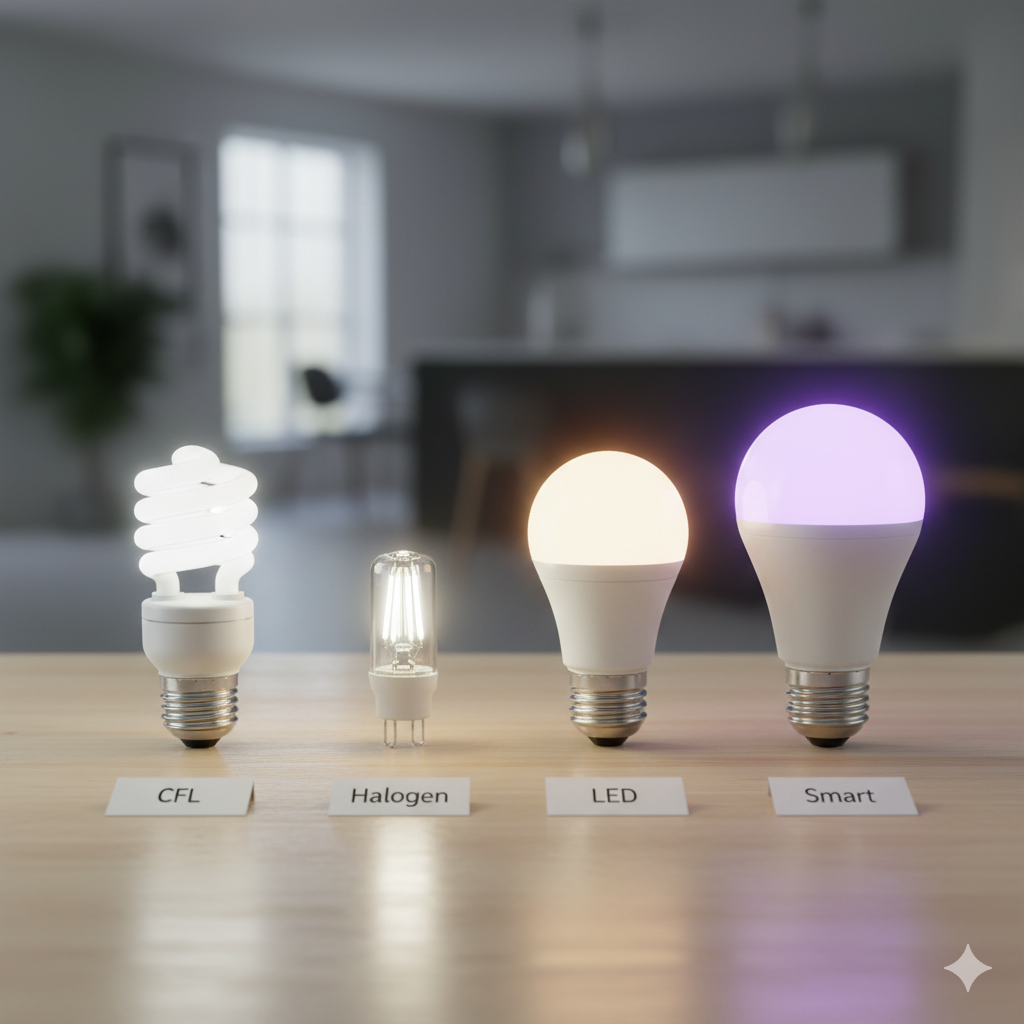
The type of bulb you use also affects the feel of the room.
 LED Bulbs
Energy-efficient and long-lasting. Ideal for all rooms, especially where you need constant lighting.
CFL Bulbs
Compact fluorescent lamps provide soft light and are suitable for living areas and bedrooms.
Halogen Bulbs
Provide a bright, white light that’s perfect for task-oriented areas like kitchens.
Smart Bulbs
Allow control of brightness and color temperature through apps, giving you flexibility in creating different moods.
Color Temperature: Warm vs. Cool Lighting
Lighting temperature influences mood and ambiance.
Warm Lighting (2700K – 3000K): Ideal for living rooms, bedrooms, and relaxation areas. Creates a cozy atmosphere.
Cool Lighting (4000K – 6500K): Suitable for kitchens, bathrooms, and workspaces. Provides clarity and helps with concentration.
Balancing both types in different rooms ensures comfort and functionality throughout your home.
Common Mistakes to Avoid
Avoid these lighting mistakes to improve comfort: Using only one overhead light — as a result, your room gets uneven lighting. Choosing bulbs with different color temperatures — this creates an unbalanced look. Blocking natural light — instead, use lighter curtains.
Final Tips for Perfect Lighting
Always plan your lighting layout before decorating Use dimmers to adjust brightness levels as needed Consider natural light and reflect it with mirrors or light walls Layer lighting for flexibility and warmth Match lighting fixtures with your interior style—modern, minimalist, industrial, or classic
Final Thoughts
Good lighting design, especially the layering techniques used by Interior Contractors in Hyderabad, can dramatically change how spacious, cozy, or functional your home feels.